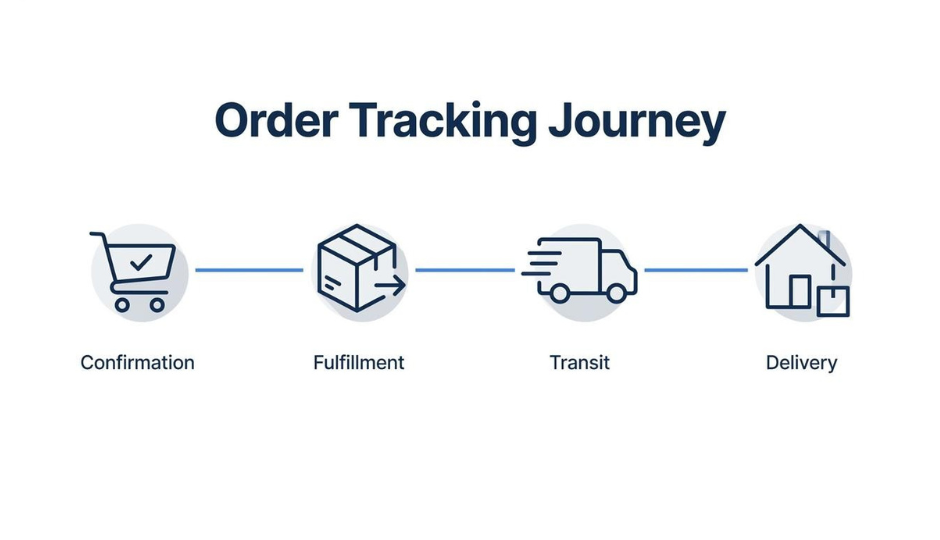
Ecommerce order tracking is the process of monitoring and tracing package movement through every fulfillment and shipping stage, from the moment a retailer confirms an order to the point a customer receives delivery at their doorstep.
This guide covers the step-by-step tracking process, tracking types available to merchants, benefits for both brands and customers, essential system features, implementation setup, common challenges, best practices, and how tracking fits within unified commerce.
The tracking process follows four sequential stages: order confirmation generates a "Label Created" status, carriers assign unique tracking numbers in format-specific patterns, facility scans update shipment status at each transit point, and last-mile notifications confirm delivery to the customer.
Six distinct tracking types serve different operational needs: carrier-based tracking, branded tracking pages that keep customers on-site, real-time GPS for last-mile visibility, multi-carrier aggregation for high-volume merchants, push-based email and SMS notifications, and self-service portals that reduce support dependency.
For brands, tracking reduces support volume (WISMO queries account for 50–70% of service tickets), lowers chargeback rates, improves carrier performance decisions, and drives repeat purchases through branded post-purchase engagement. For customers, real-time visibility reduces purchase anxiety, accurate delivery estimates enable planning, and proactive notifications build lasting trust.
Effective implementation requires multi-carrier integration, automated status sync across channels, branded page design, and ongoing accuracy audits across fulfillment partners. When tracking lives within a unified commerce platform alongside CRM and marketing, delivery data eliminates operational silos and powers lifecycle segmentation based on actual customer behavior.
Ecommerce order tracking is the process of monitoring and tracing the movement of a package as it moves through fulfillment and shipping stages. It connects the moment a retailer confirms an order to the point a customer receives delivery, providing visibility at every step in between.
This system relies on tracking numbers, carrier scans, and status updates to keep both merchants and buyers informed. Each time a package is scanned at a facility, shipment movement information is captured and updates the tracking status in real time.
According to a 2025 Narvar report, 64% of shoppers say the risk of delivery issues sometimes or regularly stops them from placing an order. Order tracking directly addresses this anxiety by giving customers verifiable proof of where their package is, when it will arrive, and what to do if something goes wrong.
For ecommerce brands, tracking serves a dual purpose. It reduces operational burden by deflecting support inquiries, and it builds the post-purchase trust that drives repeat purchases. The sections that follow break down exactly how this process works step by step, the types of tracking available, and how to implement a system that fits your store's scale.
The order tracking process works through four sequential stages: confirmation, number assignment, carrier scanning, and last-mile delivery updates.
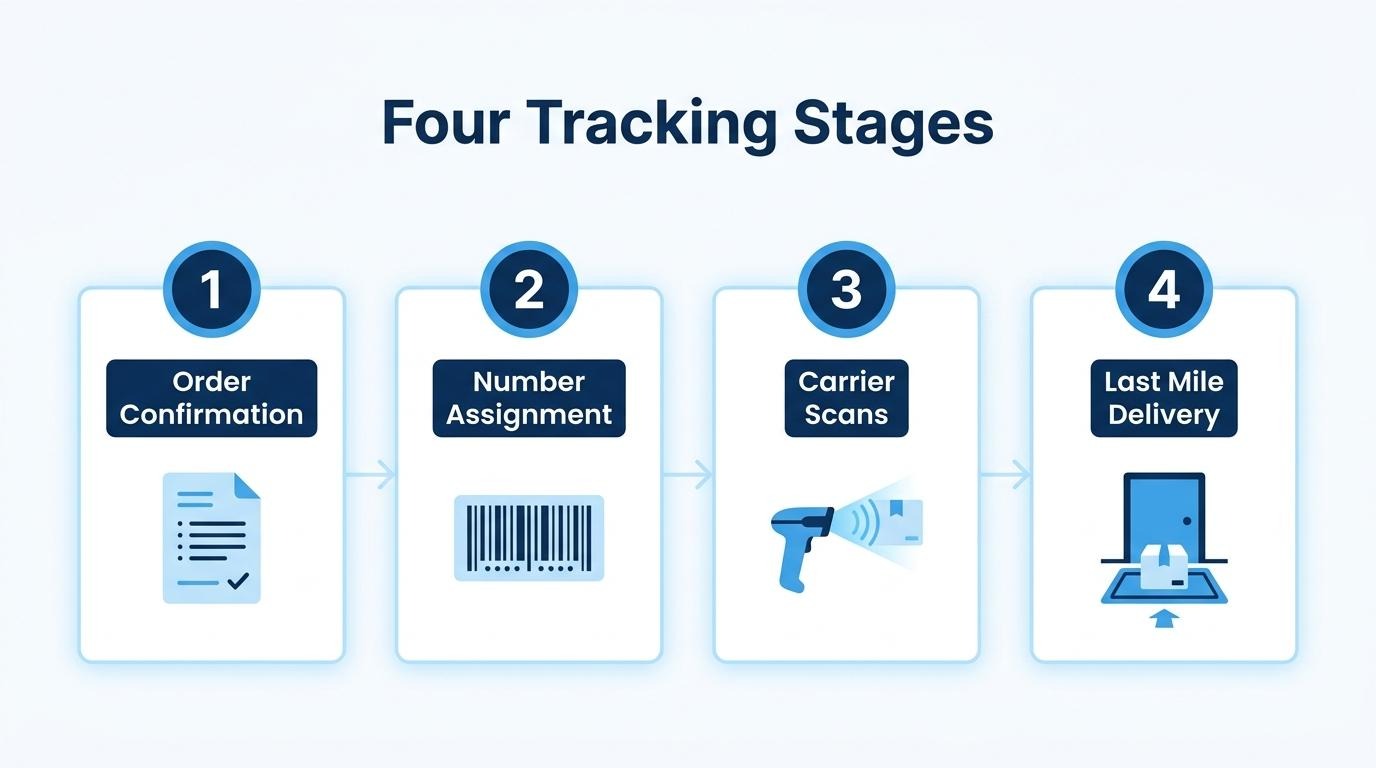
Order confirmation initiates tracking when the sender provides shipment details and billing information to the carrier. This action generates a "Label Created" status, which serves as the first visible event in the tracking timeline. According to UPS, this label creation event signals that the carrier has received the shipment's routing data and is prepared to accept the package into its network. Until the physical package receives its first facility scan, the status remains at this initial stage. Merchants using platforms like WooCommerce can automate this handoff through plugins that push tracking data to customers immediately after label generation.
Tracking numbers are generated and assigned by the carrier at the moment a shipping label is created. Each carrier uses a distinct format:
These unique identifiers link the physical package to its digital record, enabling status queries across the carrier's system. The tracking number becomes the customer's primary tool for monitoring shipment progress.
Carrier scans update shipment status each time a package is scanned at various points in its journey. According to Flexport, when a package arrives at a carrier facility, an Arrival Scan captures the movement information and pushes an update to the tracking record. Common scan types include pickup, departure, arrival, and out-for-delivery events. Each scan overwrites the previous status, giving customers and merchants a chronological log of the package's location. For international maritime shipments, a different legal framework applies; the Carriage of Goods by Sea Act limits carrier liability to $500 per package under specific conditions.
Last-mile delivery tracking reaches the customer through notifications tied to the tracking number, which allows customers to check the status of their order at various stages of the delivery process. This final leg covers the journey from a local distribution center to the customer's doorstep. According to a 2025 Sifted consumer survey, 76% of shoppers stated that a positive delivery experience influenced their decision to repurchase from a brand. Real-time updates during this phase, including "out for delivery" and "delivered" confirmations, directly shape the post-purchase experience and reduce anxiety about package arrival.
With the step-by-step process clear, understanding the different tracking types helps brands choose the right approach.
The types of ecommerce order tracking are carrier-based tracking, branded tracking pages, real-time GPS tracking, multi-carrier aggregated tracking, email and SMS notification tracking, and self-service order status portals.
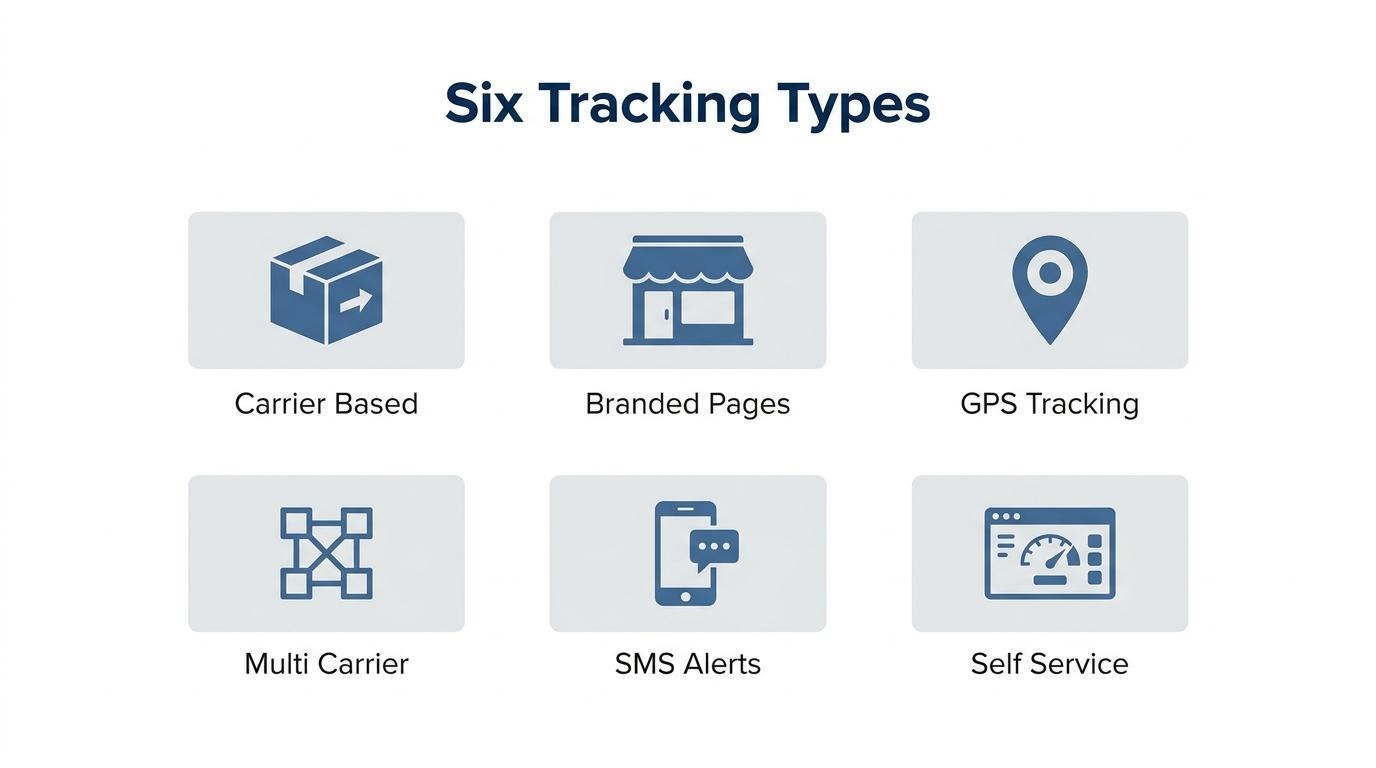
Carrier-based tracking is the most fundamental type of order tracking, where shipping carriers like UPS, FedEx, and USPS provide tracking numbers and status updates through their own systems. Customers receive a tracking number and visit the carrier's website directly to monitor shipment progress. While universally available and reliable, this approach sends customers away from the merchant's site, which fragments the post-purchase experience and limits brand engagement opportunities.
Branded tracking pages are customized tracking experiences that align with a merchant's visual identity rather than redirecting customers to a third-party carrier site. According to FarEye, branded tracking refers to customizing the tracking experience for customers after purchase, involving a tracking page that matches the brand's look and feel. These pages keep shoppers on-site, enabling product recommendations, loyalty program visibility, and consistent messaging during the high-engagement post-purchase window.
Real-time GPS tracking displays the live location of a package during the last-mile delivery stage. This type uses GPS data from delivery vehicles or driver devices to show customers exactly where their order is on a map. For brands handling same-day or next-day delivery, this level of visibility significantly reduces delivery anxiety and missed-delivery incidents by letting recipients prepare for arrival.
Multi-carrier aggregated tracking consolidates shipment data from multiple carriers into a single interface. Merchants shipping through parcel, trucking, freight, postal, express, and 3PL carriers worldwide can monitor all orders from one dashboard. This approach eliminates the need to check individual carrier portals, which becomes essential as order volume scales and carrier diversification increases.
Email and SMS notification tracking delivers shipment updates directly to customers through push-based communication channels. Rather than requiring customers to check a portal, this type proactively sends status changes at key milestones: order confirmed, shipped, out for delivery, and delivered. Proactive notifications intercept customer concern before it becomes a support ticket, making this one of the most effective formats for reducing inbound inquiries.
Self-service order status portals provide customers with the ability to independently access information and manage their orders, reducing the need for direct customer support interaction, according to 1point1. These portals typically live within a customer's account dashboard and display all active and past orders with current statuses. For brands managing high order volumes, self-service portals are often the single most impactful tool for scaling support without adding headcount.
With these tracking types established, selecting the right combination depends on your brand's scale and customer expectations.
The benefits of order tracking for ecommerce brands include reduced support costs, higher retention, fewer chargebacks, increased repeat purchases, and better carrier decisions. Each advantage compounds when tracking is proactive rather than reactive.
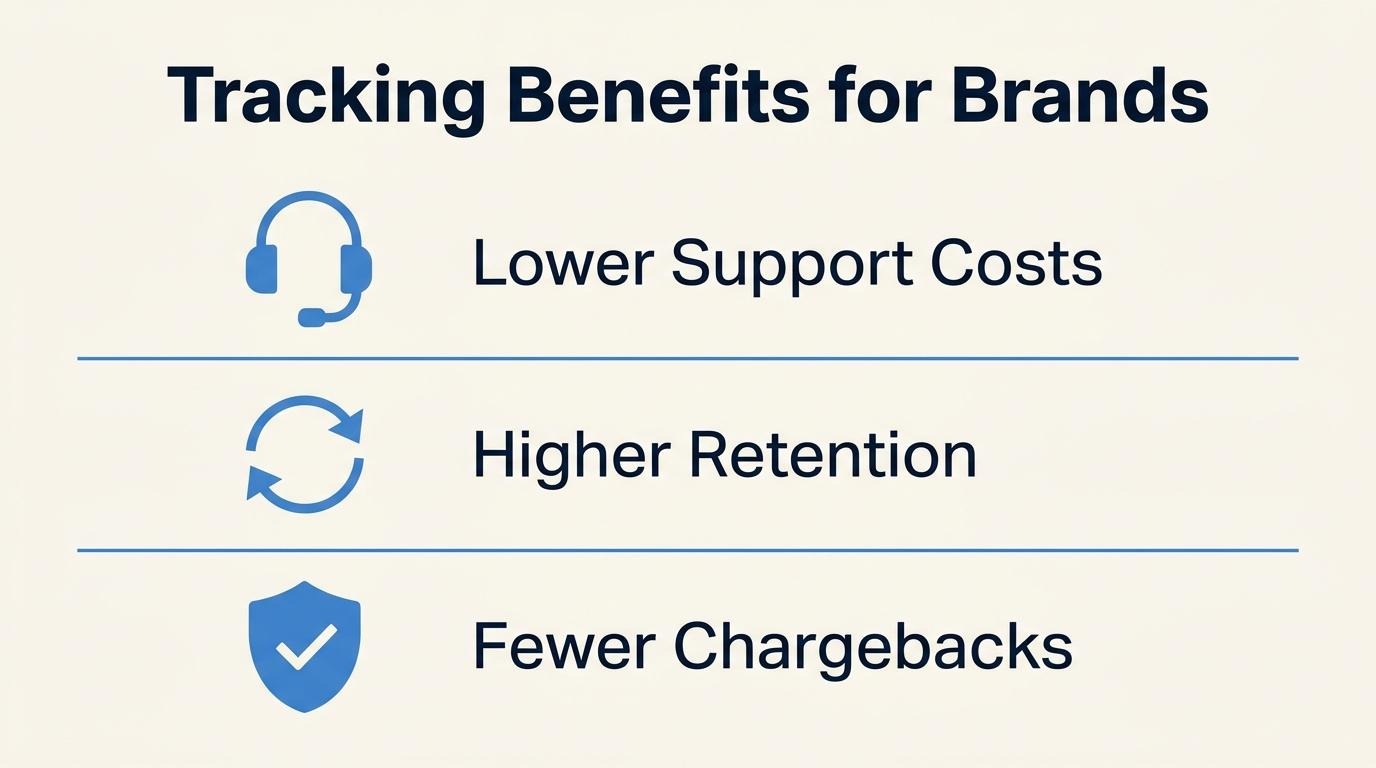
Order tracking reduces customer support volume by answering "Where Is My Order?" (WISMO) questions before customers contact a support agent. According to a 2024 analysis by 1point1, WISMO queries can make up 50–70% of customer service tickets in ecommerce, making them the single largest driver of support costs.
Proactive communication, AI chatbots, and automated tracking updates eliminate most of these inquiries by providing answers at the moment of curiosity. Fulfillment communication that clearly explains next steps and shares tracking information as soon as it becomes available keeps customers informed without human intervention. For brands managing high order volumes across multiple carriers, this automation is the difference between a lean support team and an overwhelmed one.
Tracking improves customer retention and LTV by reinforcing trust at every post-purchase touchpoint. When customers feel informed and in control of their delivery experience, they associate that confidence with the brand itself.
A 2025 consumer survey by Sifted found that 76% of shoppers stated a positive delivery experience influenced their decision to repurchase, up from 72% in 2024. This steady increase signals that delivery visibility is becoming a baseline expectation rather than a differentiator. Brands that meet this expectation retain more customers; those that don't lose them to competitors who do.
Shipment visibility lowers refund and chargeback rates by providing documented proof of delivery status at every stage. When customers can verify a package is in transit, they are far less likely to file a dispute claiming non-delivery.
According to Chargeflow's 2024 report, chargeback rates rose 222% from 0.15% in Q1 2023 to 0.47% in Q1 2024. Real-time tracking directly counters "item not received" claims by giving both the merchant and the customer a shared timeline of events. For brands operating at scale, even fractional chargeback reductions translate into meaningful revenue recovery.
Branded tracking drives repeat purchases by keeping customers engaged with the brand during the delivery window, a period of high attention that most merchants ignore. Instead of redirecting buyers to a generic carrier page, a branded tracking experience displays the merchant's visual identity, product recommendations, and loyalty program prompts.
This turns a utilitarian status check into a marketing touchpoint. Customers who interact with branded tracking pages return to the merchant's ecosystem rather than disappearing into a third-party site. For brands already investing in acquisition, this post-purchase engagement recaptures attention at zero additional ad spend.
Tracking data improves carrier performance decisions by revealing delivery speed, exception rates, and regional reliability patterns across every shipment. Brands can compare on-time delivery percentages, identify chronic delay corridors, and reallocate volume to higher-performing carriers based on actual data rather than contracted SLAs.
This operational intelligence is especially valuable during peak seasons when carrier capacity fluctuates. Merchants who monitor tracking data continuously can renegotiate contracts with evidence, split shipments strategically, and set accurate delivery estimates that reduce customer disappointment.
With tracking benefits established across support, retention, and operations, the next question is how these same systems benefit customers directly.
The benefits of order tracking for customers include reduced purchase anxiety, better delivery planning, and stronger brand trust. Each benefit addresses a different stage of the post-purchase experience.
Real-time visibility reduces purchase anxiety by giving customers continuous confirmation that their order is progressing toward delivery. According to a 2024 Narvar report, 64% of shoppers say the risk of delivery issues sometimes or regularly stops them from placing an order. When customers can verify package location and status at any moment, that hesitation diminishes. The psychological shift matters: uncertainty drives support tickets and cancellation requests, while visible progress reassures buyers that their purchase is safe and on track. For brands handling high order volumes, this single feature eliminates a major friction point between checkout and doorstep.
Delivery estimates help customers plan by providing a specific arrival window they can schedule around. Whether coordinating a signature requirement, arranging to be home for a high-value package, or simply knowing when a gift will arrive, accurate date predictions remove guesswork. A 2024 Metapack consumer study found that 55% of consumers expected deliveries within 48 hours, a 5% increase from 2023. As expectations tighten, vague "3–7 business days" windows no longer satisfy buyers who need precision. Reliable estimates also reduce failed delivery attempts, which saves both the customer and the carrier a second trip.
Proactive notification builds brand trust by demonstrating that the brand prioritizes transparency over silence. Rather than forcing customers to search for updates, automated alerts at key milestones (shipped, in transit, out for delivery) signal competence and care. A 2025 Sifted consumer survey found that 76% of shoppers stated a positive delivery experience influenced their decision to repurchase, up from 72% in 2024. Brands that communicate before the customer has to ask create a perception of reliability that outlasts the single transaction. With essential tracking features in place, the next consideration is which system capabilities deliver these benefits at scale.
An order tracking system should include six key details: expected delivery date, order status progress bar, carrier name, linked tracking number, detailed shipping history, and a package contents summary. The sections below explain why each capability matters.
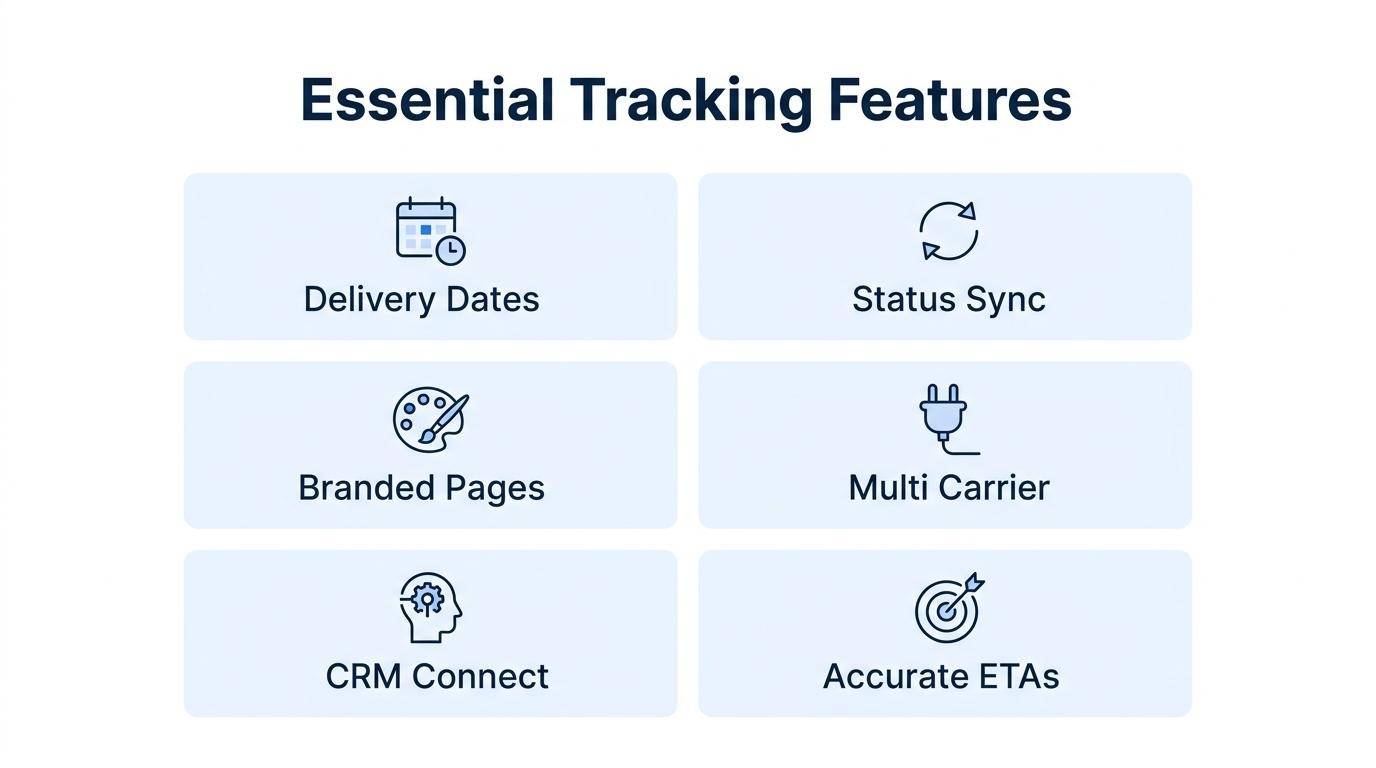
Automated status sync across channels matters because customers interact with brands through multiple touchpoints and expect consistent information at each one. When order data updates in real time across web, email, app, and in-store systems, shoppers never encounter conflicting delivery information.
According to My Total Retail, a unified commerce approach ensures a consistent post-purchase experience across all channels, which is crucial given that 90% of consumers consider the post-purchase experience as important as the quality of the products themselves. Fragmented systems that require manual reconciliation between channels create delays and errors that erode trust quickly.
Customizable branded tracking pages are important because they keep customers on your domain instead of redirecting them to third-party carrier sites. This maintains brand consistency, captures post-purchase engagement, and creates opportunities for cross-sell content within a familiar environment.
Redirecting shoppers to generic carrier pages breaks the brand experience at a moment of high attention. A branded page reinforces visual identity, displays relevant product recommendations, and reduces the likelihood of customers navigating away to competitor sites during the delivery window.
Multi-carrier integrations matter at scale because growing brands ship through multiple carriers based on cost, speed, region, and package type. Without aggregated tracking across all carriers, operational teams must manually monitor separate dashboards, and customers receive inconsistent tracking experiences depending on which carrier handles their order.
A single integration layer normalizes status updates from parcel, freight, postal, express, and 3PL carriers into one unified feed. This is particularly critical during peak seasons when order volumes spike and carrier diversification becomes a fulfillment necessity rather than a preference.
Tracking should connect to customer profiles and CRM because delivery data enriches the customer record with behavioral context. When a CRM captures shipping preferences, delivery issues, and engagement with tracking notifications, support and marketing teams operate from shared intelligence rather than isolated datasets.
Real-time tracking tools allow customers to see current package status and location, but the merchant-side value compounds when that same data ties to lifetime purchase history, communication preferences, and satisfaction scores. For brands running multiple tools, this connection often requires middleware; platforms with a shared customer data layer, including SHOPLINE, handle this natively.
Estimated delivery date predictions are valuable because they set accurate expectations that reduce anxiety and preempt support inquiries. When customers know precisely when a package will arrive, they plan accordingly and contact support far less frequently.
According to AfterShip, an industry benchmark for EDD accuracy suggests that if accuracy is not 95% or above, it is more beneficial not to provide an estimated date at all. AI-trained prediction models now achieve 96% accuracy across deliveries, far exceeding typical carrier prediction rates below 50%. Inaccurate dates cause more frustration than no date at all, making precision the non-negotiable standard.
With core features identified, the next step is configuring them for your specific store setup.
You set up order tracking by selecting a method matched to your shipping volume, integrating it with your platform, configuring automated notifications, and designing a branded experience. The following subsections cover each step.
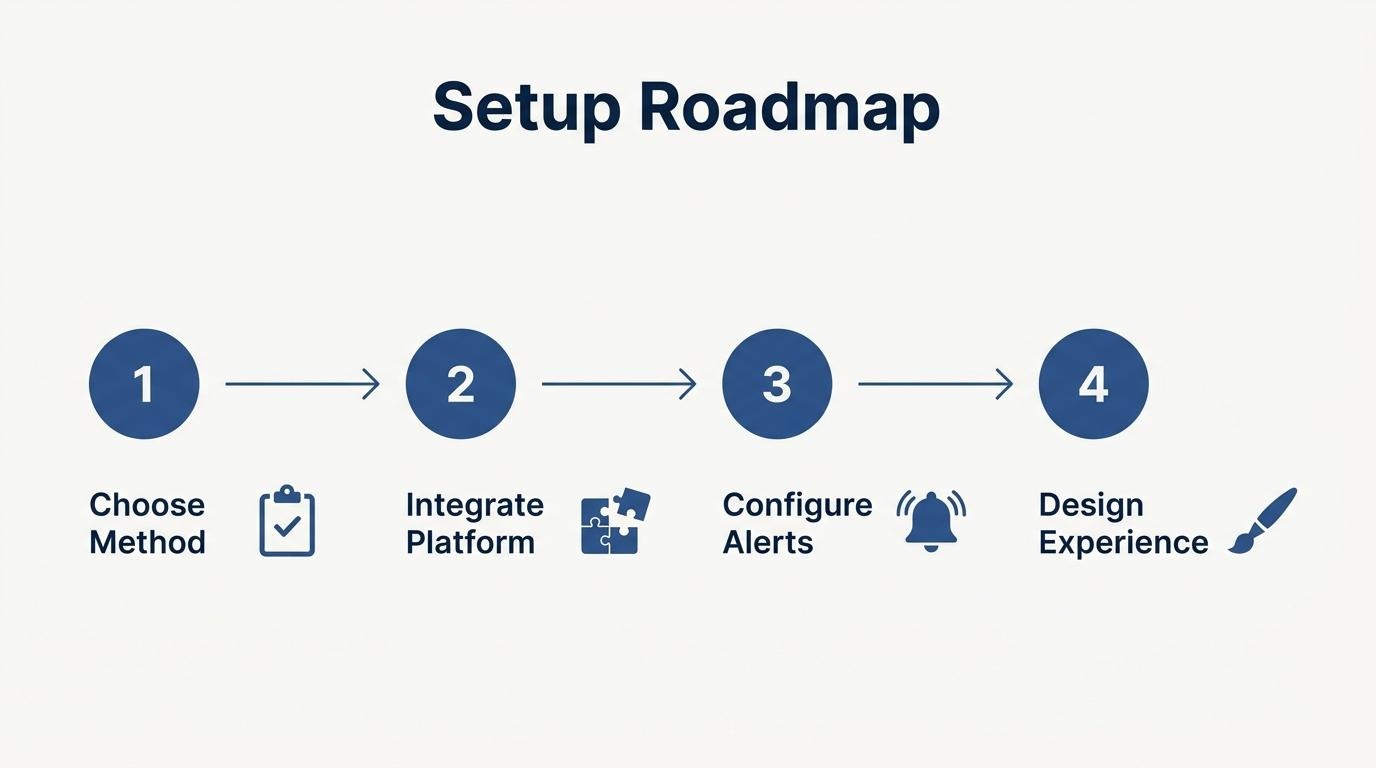
You choose a tracking method that fits your volume by matching operational complexity to order frequency. Low-volume stores (under 100 orders per month) can rely on manual carrier-provided tracking links shared via email. Mid-volume merchants benefit from multi-carrier aggregation tools that consolidate tracking across carriers into one dashboard. High-volume operations need API-based integrations that sync tracking data automatically without manual input.
Key factors to evaluate:
For brands shipping across multiple carriers at scale, API-driven solutions eliminate the manual bottleneck that slows fulfillment teams during peak periods.
You integrate tracking with your ecommerce platform by connecting carrier data feeds directly to your storefront's order management system. This keeps tracking information accessible within the customer's account rather than redirecting to external carrier sites.
According to Sally Collins, Senior UX Researcher at Baymard Institute, "Ecommerce sites redirecting to third-party tracking sites often fail users' information and navigation needs." Native integration solves this by displaying tracking status on-site.
Integration considerations include:
You configure automated shipping notifications by setting trigger points at each fulfillment milestone. These triggers send emails or SMS messages when specific status changes occur, such as label creation, carrier pickup, in-transit scans, out-for-delivery, and delivery confirmation.
Steps to configure effectively:
Proactive notifications preempt customer inquiries rather than reacting to them, which is particularly valuable during high-volume shipping periods.
Branded tracking refers to customizing the tracking experience for customers after purchase, involving a tracking page that aligns with the brand's identity. Instead of sending buyers to a generic carrier page, you keep them within your ecosystem.
Essential elements of a branded tracking page:
This approach transforms a utilitarian touchpoint into a brand-reinforcing moment that encourages repeat visits rather than ending the customer journey at a third-party carrier site.
With tracking fully configured, addressing common challenges ensures the system performs reliably at scale.
Common order tracking challenges include delayed updates, multi-carrier inconsistencies, high WISMO volume during peak seasons, and international shipment gaps. The following sub-sections address each problem with targeted fixes.
You handle delayed or missing tracking updates by setting customer expectations early and building fallback communication triggers. Tracking delays typically occur when carriers fail to scan packages at transit points, leaving status pages stagnant for hours or days. Proactive notification systems can detect stalled updates and automatically send messages acknowledging the delay before customers contact support.
Setting a defined threshold (for example, no scan activity for 12+ hours) triggers an automated email explaining the situation. This approach converts a silent gap into a managed communication moment, reducing inbound tickets and preserving trust during transit disruptions.
You manage multi-carrier tracking inconsistencies by normalizing status data through a unified tracking layer. According to a 2024 Narvar report, on-time delivery rates varied significantly across major carriers during the holiday season: USPS at 90%, FedEx at 92%, and UPS at 97%. These differences create unpredictable customer experiences when stores ship via multiple carriers.
A multi-carrier aggregation tool standardizes disparate status labels into consistent terminology. Instead of displaying carrier-specific language that confuses shoppers, the system translates raw scan data into uniform stages: confirmed, in transit, out for delivery, delivered.
You reduce WISMO inquiries during peak seasons by deploying self-service tracking portals and proactive status notifications before customers initiate contact. According to 1point1, WISMO queries can constitute around 70% of post-purchase customer service tickets in ecommerce. During holiday surges, this volume spikes further.
Effective reduction strategies include:
You address international shipment tracking gaps by implementing cross-border tracking aggregation and setting explicit expectations around customs-related delays. International shipments often lose visibility when packages transfer between domestic carriers and destination-country postal services; the original tracking number may stop updating entirely once the parcel crosses borders.
Solutions that close these gaps include:
For scaling brands shipping globally, consolidating tracking into one system that handles cross-border handoffs removes a common blind spot that fragmented tool setups leave unresolved.
Best practices for ecommerce order tracking center on proactive communication, strategic timing, and ongoing accuracy verification. The following sections cover notification frequency, cross-sell tactics, review generation, and fulfillment auditing.
You should send tracking notifications at each meaningful status change rather than on a fixed schedule. Essential touchpoints include order confirmation, shipment dispatch, out-for-delivery, and delivery confirmation. Avoid granular middle-of-the-night depot scans that add noise without value. For high-value or time-sensitive orders, adding a "delayed" alert when exceptions occur keeps expectations managed. Most brands find four to five notifications per order strikes the right balance between visibility and inbox fatigue. Fewer than three leaves customers guessing; more than six risks opt-outs.
You use tracking touchpoints for cross-sell opportunities by embedding relevant product recommendations into high-engagement moments. Tracking pages and shipment notifications carry open rates far above standard marketing emails, making them ideal surfaces for complementary product suggestions. Effective approaches include:
Each recommendation should feel contextual to what the customer already ordered, not generic. This turns a logistics touchpoint into a revenue channel without disrupting the informational purpose of the update.
You turn delivery confirmation into a review prompt by triggering a follow-up message shortly after the tracking status confirms delivery. Timing matters: sending the request 24 to 48 hours post-delivery gives customers enough time to open and evaluate the product without letting momentum fade. The prompt should link directly to the product review page, require minimal effort, and optionally include a photo upload option. Pairing the request with a small loyalty incentive increases completion rates. Brands that separate the review ask from the delivery notification (rather than burying it inside) typically see higher response rates.
You audit tracking accuracy across fulfillment partners by implementing real-time inventory tracking and conducting multiple accuracy audits at the receiving dock to prevent overselling and stockouts, according to Wodely's fulfillment management best practices. Key audit steps include:
Consistent auditing reveals which partners introduce tracking blind spots, enabling data-driven decisions about carrier allocation and SLA enforcement.
With best practices in place, connecting tracking to a unified commerce system amplifies these benefits further.
Order tracking fits into a unified commerce operation by functioning as one integrated component within a single platform that connects inventory, orders, and customer data. The subsections below cover what changes when tracking shares a system with CRM and marketing, and key takeaways about ecommerce order tracking.
What changes when order tracking lives in the same system as CRM and marketing is the elimination of data silos between fulfillment visibility and customer engagement. According to Deloitte, unified commerce eliminates operational silos by integrating inventory management, order management, and customer data into a single, cohesive platform, enhancing overall operational efficiency.
When tracking data feeds directly into CRM profiles, delivery behavior informs segmentation, lifecycle triggers, and retention campaigns without manual syncing or third-party connectors. Contrast this with plugin-dependent setups: WooCommerce, for example, relies on add-ons like "Orders Tracking for WooCommerce" just to add tracking numbers to orders. That fragmented approach creates gaps between shipment events and customer records. For brands operating at scale, consolidating tracking within the same system as marketing automation removes one of the most common sources of data latency and customer experience inconsistency.
The key takeaways about ecommerce order tracking are:
For brands consolidating away from a multi-tool setup, SHOPLINE is one option where order tracking, CRM, and marketing automation share the same customer data layer natively.